
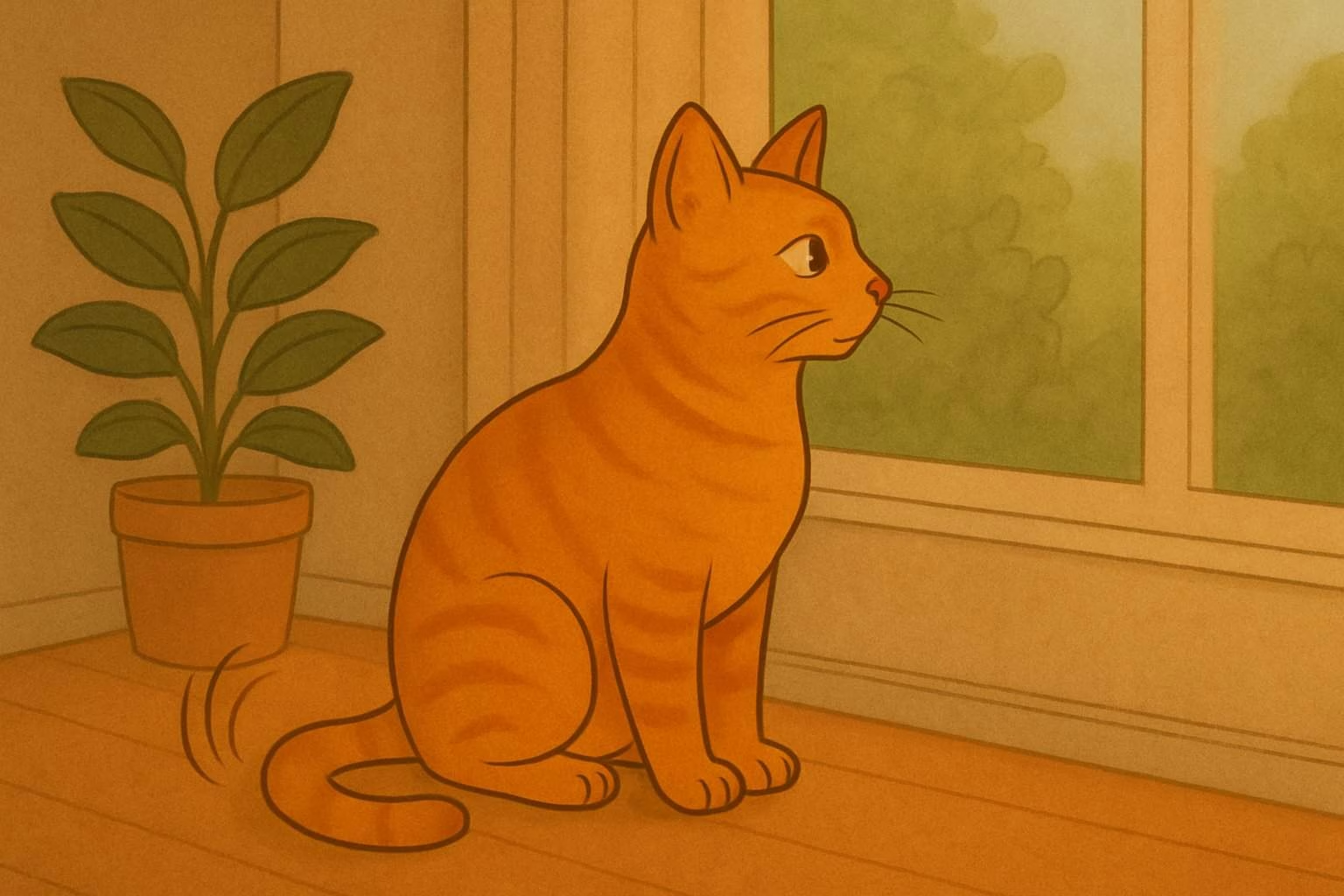
The rest of your cat might be still — but that tail tells a different story. Flick, flick, flick. Is she annoyed? Excited? Plotting something with the curtains? A flicking tail might be subtle, but in cat language, it’s practically a speech bubble.
💌 Dear Tabby
My cat flicks her tail constantly, even when she’s just sitting quietly. Sometimes it’s a little flick at the end, other times it swishes like a metronome. She doesn’t seem angry, but I can’t tell if she’s relaxed or getting annoyed. Is this something I should be reading more into?
Puzzled in Peoria
🐾 Tabby Replies
Ah, the tail flick — the feline version of an eye roll, a light bulb, and sometimes even a warning flag. Unlike dogs, whose tails mostly shout one emotion at a time, cat tails are layered, subtle, and context-rich.
Let’s unravel this one flick at a time.
😼 Low, Rhythmic Flicking
If your cat is lounging but her tail tip is flicking gently every few seconds, she’s likely focused or interested. Maybe she’s listening to a noise, watching a bug, or just turning over a thought in her fluffy little head.
This is not a sign of stress — it’s quiet alertness. Her body is calm, but her tail is saying, “I’m paying attention.”
🐍 The Sudden Whip
If the flick becomes fast, strong, and frequent — especially when she’s being petted or approached — take note. That’s irritation building. The more it whips, the more likely your cat is asking for space.
Tabby herself once went from a gentle purr to a tail whip in three seconds flat — all because I dared to touch her belly. I still have the receipt. It’s a scratch on the back of my hand.
🎯 Focus and Play
Cats often flick their tails right before they pounce or chase. This version is a coiled spring — a mix of excitement and concentration.
You might see it when she’s crouched behind the sofa, eyes locked on a toy, tail twitching with electric tension. It means “I’m about to do something.”
Let her cook.
🧘♀️ Flicking While Resting
Some cats flick their tails while they’re resting — or even sleeping. It can look odd: the body is still, the breathing is slow, but the tail keeps tapping away.
This can be a sign of light sleep, dreaming, or simply processing minor sensory input like sounds or light. If the tail movement is slow and the cat otherwise looks peaceful, there’s no need to worry.
😾 Agitation or Overstimulation
Tail flicking can also be your cat’s way of regulating herself when she’s overstimulated. If she’s being petted for too long, or there’s too much going on around her, she may start to flick her tail faster and more forcefully.
That’s the feline equivalent of saying, “That’s enough now.”
If you miss the message, she might follow up with a paw swat or a tactical retreat under the nearest bed.
🐈Every Cat is Different
Some cats are naturally more expressive with their tails. Breed, personality, and environment all influence how and when they flick.
A shy cat may flick her tail only when stressed. A bold, curious cat might flick as part of her regular movement pattern. Over time, you’ll learn your cat’s personal tail dictionary.
Watch what’s happening around her — and with the rest of her body — to interpret the flick.
🐱 Tabby’s Final Word
A flicking tail isn’t always a bad sign. It’s a form of communication — one of many tools in your cat’s behavioral toolbox. It might say, “I’m intrigued,” “I’m annoyed,” or even “I’m not asleep, I’m just pretending.”
Pay attention to what comes before and after the flick. Was she playing? Getting pet? Watching something? The context tells the story.
When you read the signals right, you’ll avoid unwanted swats and earn some serious trust. And that’s the real tail of success.