
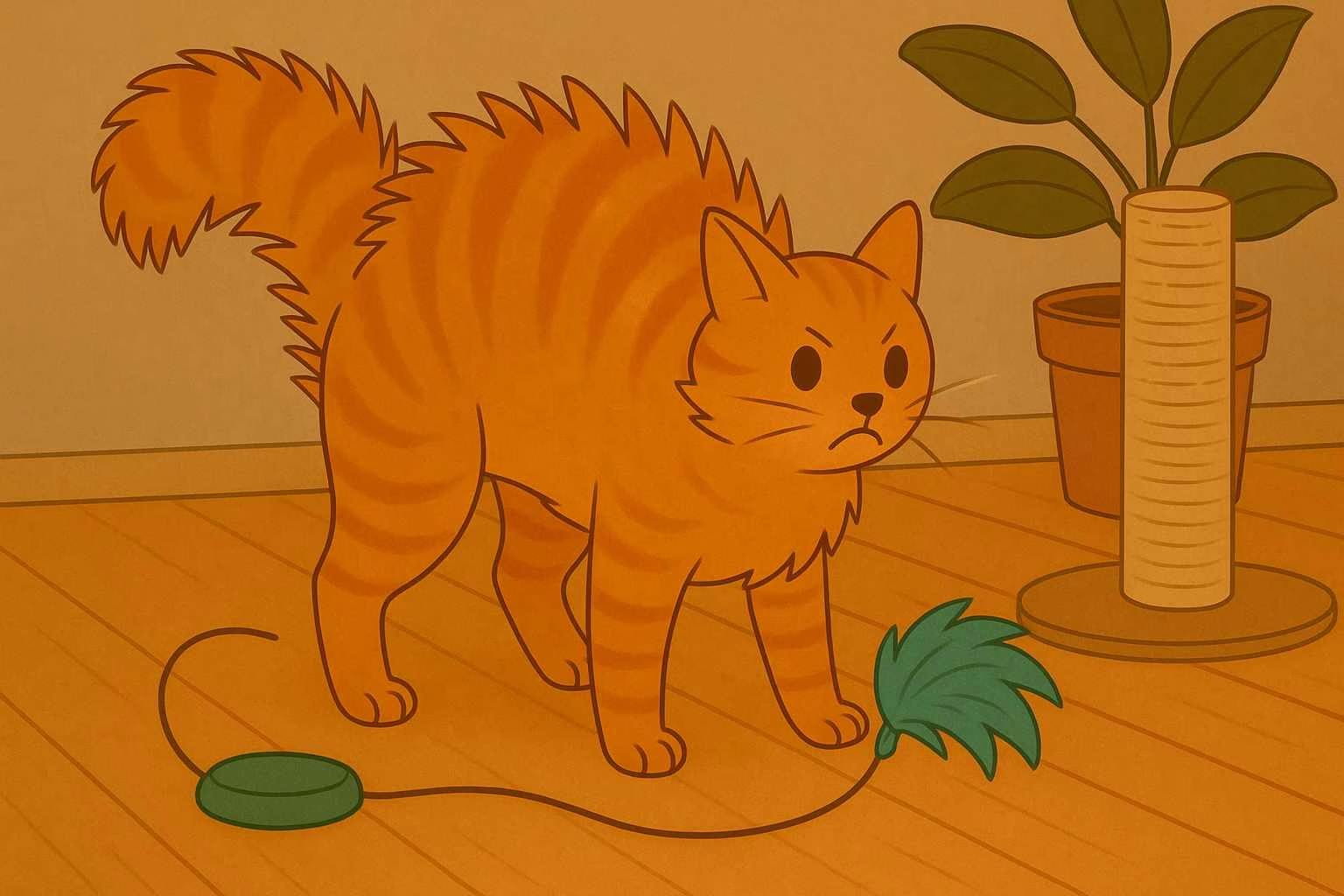
One minute your cat is pouncing on a feather toy. The next, they’re a puffball with legs, tail flared like a pipe cleaner. Is it fear? Is it fun? Is your cat secretly part porcupine? Let’s decode the playful puff.
Dear Tabby 🐾
“Sometimes during play, my cat’s tail puffs up dramatically, especially during zoomies or when she leaps off the couch mid-attack. She doesn’t seem scared — just really excited. Is the puffed tail always a fear response, or can it mean something else?”
— Floofed and Confused in Flagstaff
Tabby Replies 🐱
Ah yes, the dramatic tail puff — one of the most theatrical tools in your cat’s communication kit. And while it’s often associated with fear or aggression, it can also be pure excitement bursting out of every follicle.
Let’s break down what’s going on when your cat puffs their tail during play.
🧨 Sudden Bursts of Energy
Play triggers your cat’s hunting instincts, and those instincts don’t know they’re chasing a feather on a string instead of a mouse.
A puffed-up tail in the middle of zoomies or ambushes is a result of sudden adrenaline and excitement. It’s your cat’s nervous system flipping into high gear — not because they’re scared, but because they’re fully activated.
Think of it as their body yelling “Game on!” in every direction.
🐯 Simulated Threat Response
When cats play, they often simulate the behaviors they’d use in real combat — stalking, pouncing, wrestling. A puffed tail is one of those behaviors.
Even in a fun moment, your cat’s system may momentarily react as though there’s a real “threat,” prompting the classic floof. It’s like cosplay for wild instincts.
In this case, the fear center is activated briefly, but the context is safe, fun, and controlled.
😺 Play With a Dash of Surprise
Sometimes the puff appears when your cat surprises themselves.
They may hear a noise mid-pounce, misjudge a jump, or catch a sudden glimpse of their own shadow. The result? Instant fluff.
It’s a reflex — the same mechanism they’d use if they were startled in the wild — just sparked by a domestic plot twist.
You might notice this especially in kittens or high-energy adults who love to leap before they look.
🧘♀️ It Deflates Quickly
The key difference between a fear puff and a play puff is what happens afterward.
If your cat’s tail fluffs and then settles quickly — followed by more play, relaxed posture, or even a good flop on the floor — it’s playful energy, not panic.
Fear-puffing tends to come with hissing, flattened ears, or a frozen posture. Play-puffing is usually more fluid, bouncy, and — let’s be honest — hilarious.
Tabby’s Final Word 🧶
A puffed tail during playtime isn’t a red flag. It’s a fluffy exclamation mark.
Your cat is reacting with intensity, excitement, and a sprinkle of instinct. As long as they recover quickly and stay relaxed between play bursts, there’s nothing to worry about.
So enjoy the show. The next time your cat turns into a puffball mid-zoomie, you can nod knowingly and say, “Ah, yes — the ancient art of the joyful floof.”